Briquettes vs Pellets: Key Industrial Differences
Understanding the operational, logistical, and performance factors that differentiate two major biomass fuel formats. As industries increasingly adopt biomass as an alternative to conventional fossil fuels, two fuel formats have emerged as widely used options in industrial thermal applications: biomass briquettes and biomass pellets. Both are processed biomass fuels designed to improve handling, transportation, storage, and combustion efficiency compared to loose agricultural
madhvibangur
May 283 min read
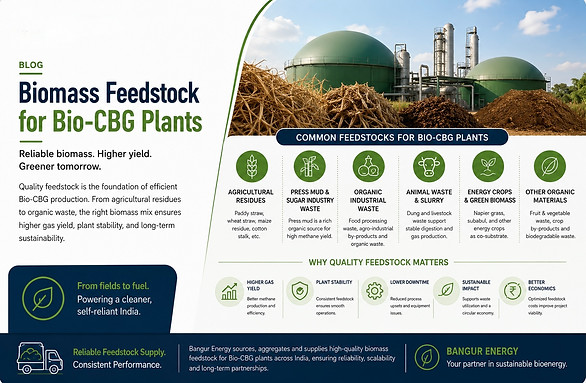
Biomass Feedstock for Bio-CBG Plants
Understanding the role of agricultural residue and organic biomass in India’s growing compressed biogas ecosystem. India’s transition toward cleaner energy solutions is accelerating the growth of Bio-CBG (Compressed Biogas) infrastructure across the country. As industries and policymakers focus on reducing fossil fuel dependence and improving waste utilisation, Bio-CBG has emerged as a promising renewable fuel alternative with applications across transportation, industrial en
madhvibangur
May 284 min read
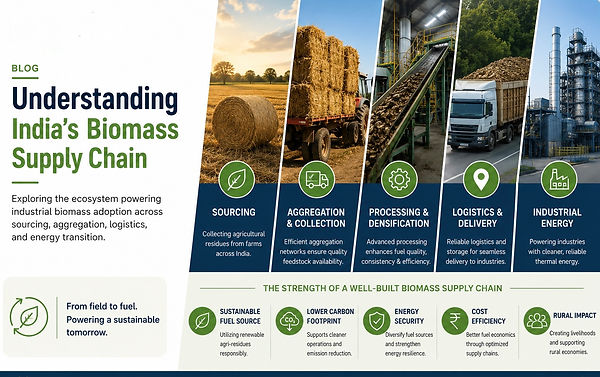
Understanding India's biomass Supply Chain
Exploring the ecosystem powering industrial biomass adoption across sourcing, aggregation, logistics, and energy transition. India’s growing focus on renewable energy and industrial decarbonisation has accelerated interest in biomass as an alternative fuel for thermal energy systems. Across sectors such as textiles, food processing, paper, chemicals, ceramics, and manufacturing, industries are increasingly evaluating biomass to reduce dependence on fossil fuels and diversify
madhvibangur
May 284 min read
Biomass vs Coal for Industrial Boilers
A closer look at industrial fuel transition considerations, biomass integration, and operational factors influencing thermal energy systems. Industrial thermal systems across sectors such as textiles, food processing, chemicals, paper, ceramics, and manufacturing continue to rely heavily on coal-fired boilers for steam and heat generation. However, increasing environmental regulations, fuel cost volatility, carbon reduction targets, and sustainability commitments are driving
madhvibangur
May 274 min read